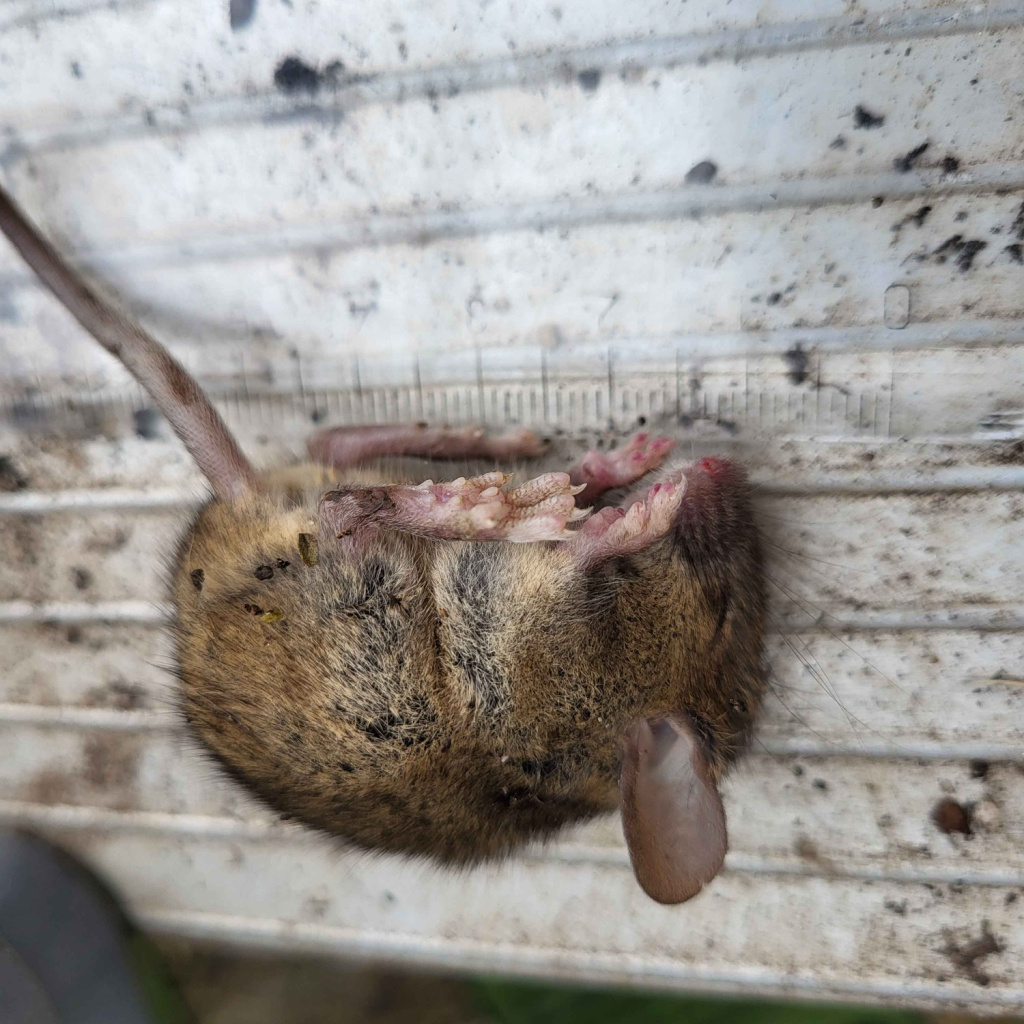
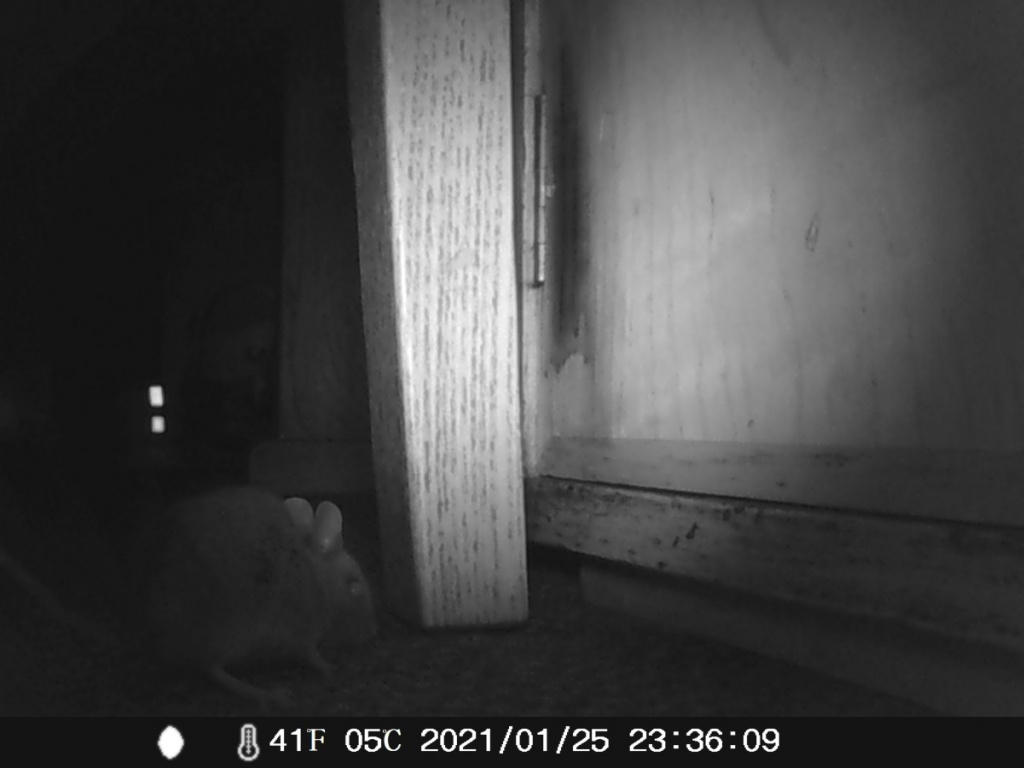
House Mouse
House Mouse - Mus musculus
Description
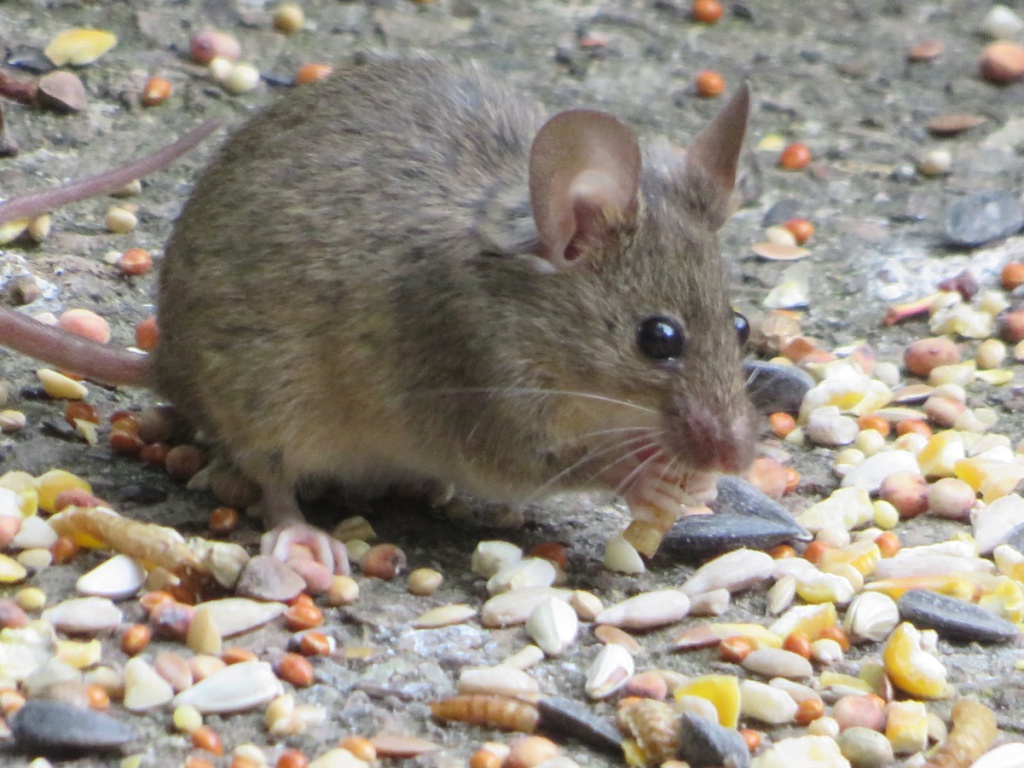
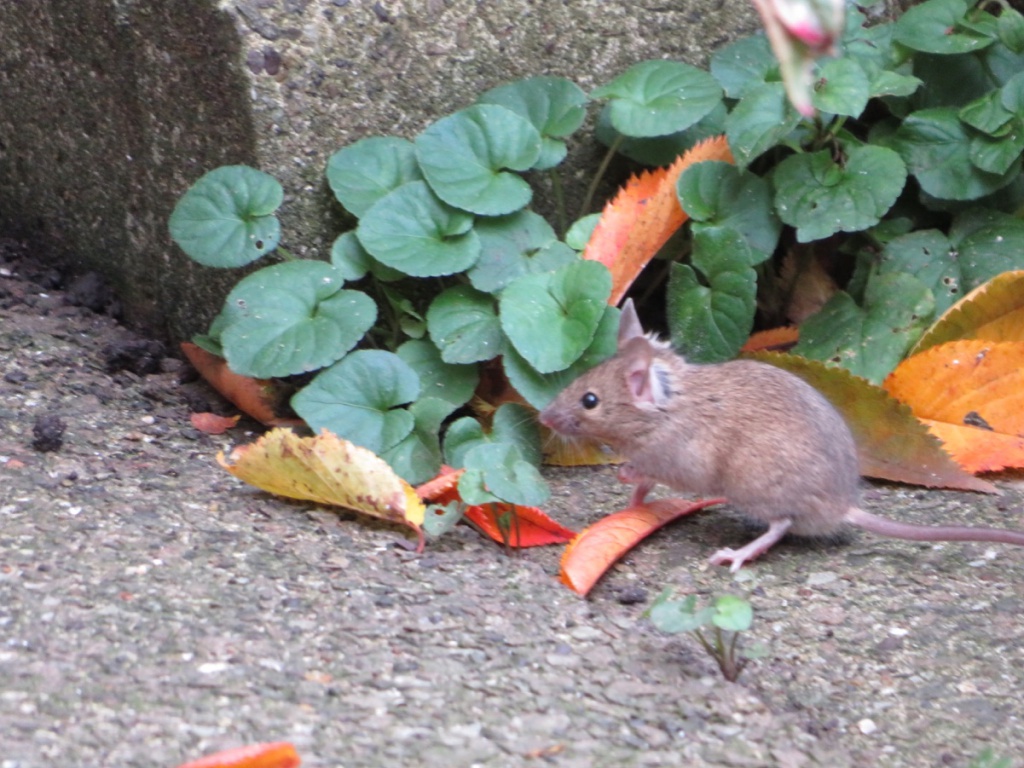
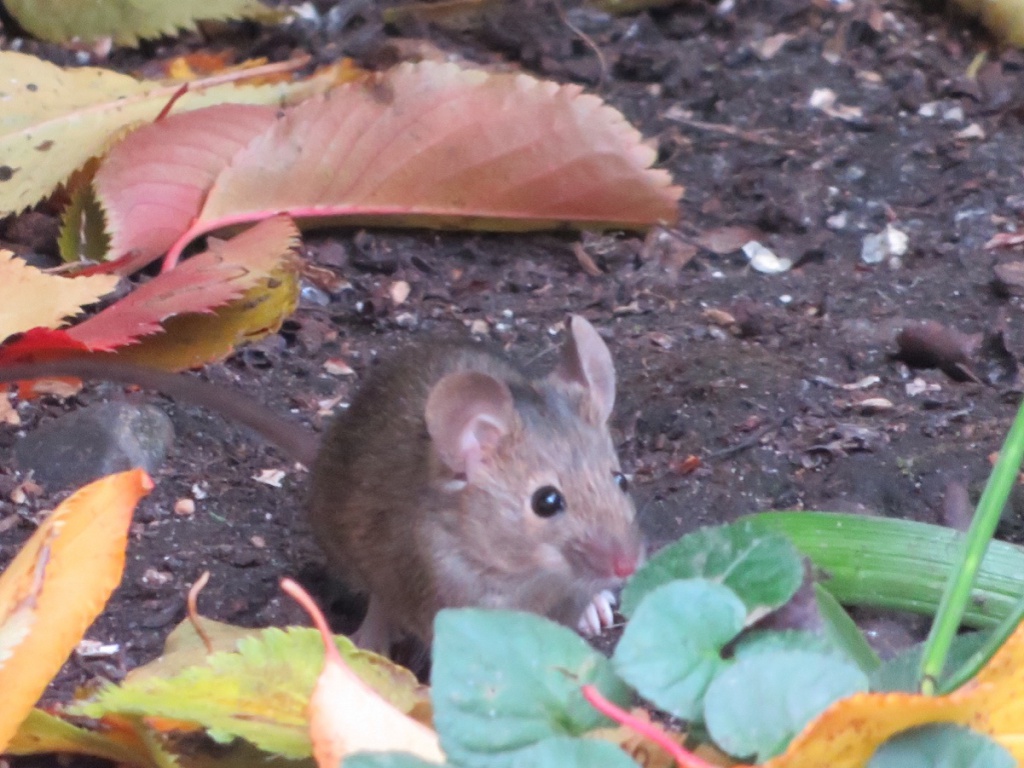
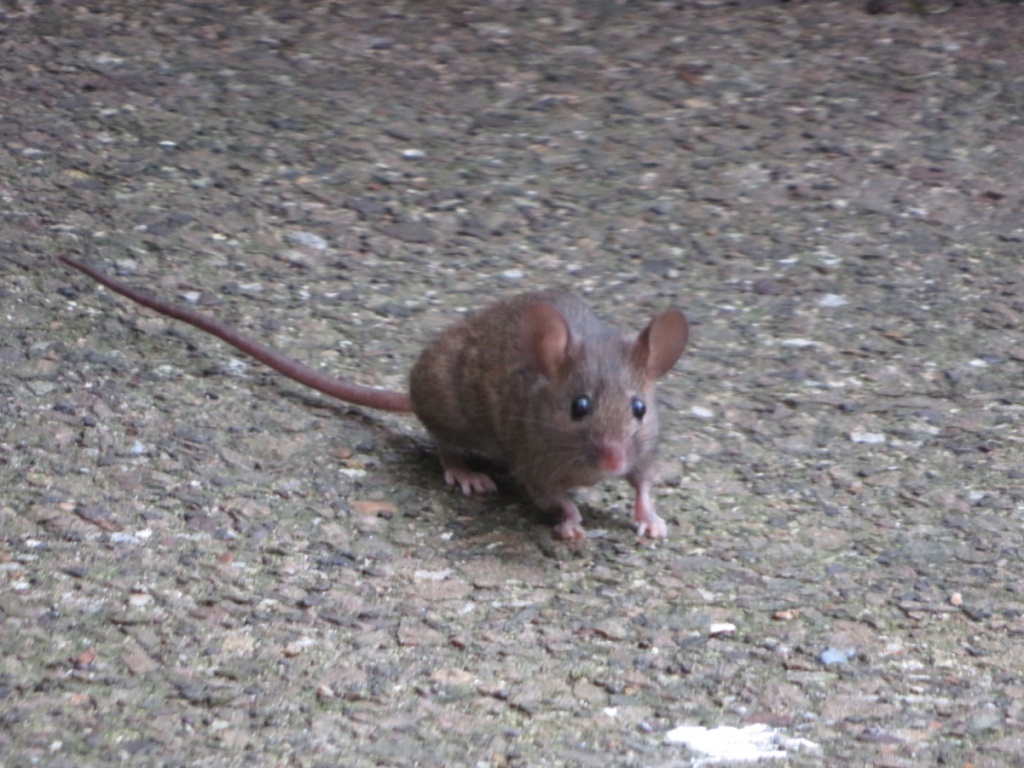
Body length: 6.5-10cm, Weight: 12-22g. House mice have brown-grey fur, with slightly lighter under-parts. They have large ears, a pointed snout and a long tail.
Identification difficulty

Habitat
They are typically found in areas near to human habitation and open fields.
When to see it
All year round ? does not hibernate.
Life History
House mice are nocturnal, with some daytime activity. Wild populations are poor competitors with other rodents, and are often displaced by other species when away from human habituation. They are typically aggressive to each other, and fighting is common, although females have an aggression inhibiting hormone in their urine to prevent attack from other mice. House mice build tunnel systems which may be a short tunnel with just one chamber or a complex network with several exits and chambers. Some of these chambers may contain bedding material. Females produce about 5-10 litters per year, consisting of 4-8 young. The young are independent after 3 weeks.
UK Status
House mice originated in Asia but have since spread throughout the world. Along with brown rats, they are considered to be the most widespread terrestrial mammal other than humans. Often considered a pest species, they are common nationally.
VC55 Status
Common in Leicestershire and Rutland.
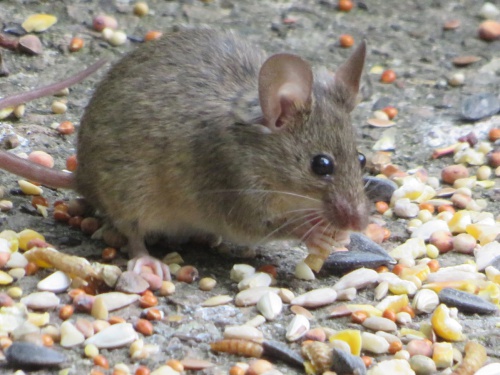 CAPochin
Stoneygate garden
03 June 2022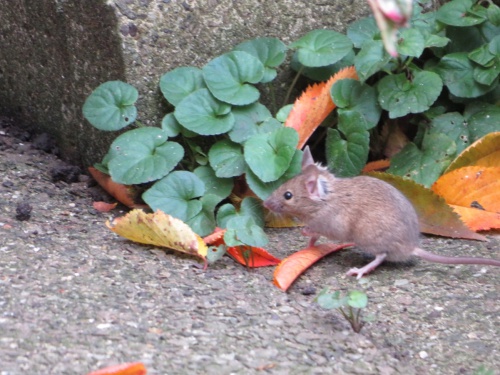 CAPochin
Stoneygate garden
17 October 2020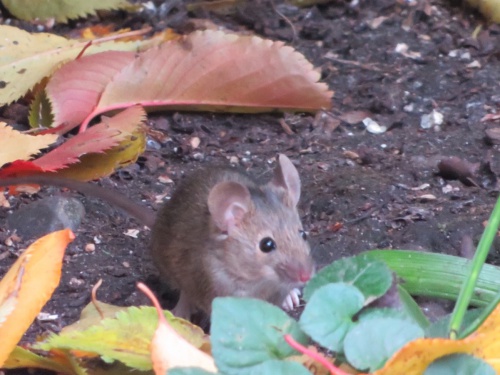 CAPochin
Stoneygate garden
17 October 2020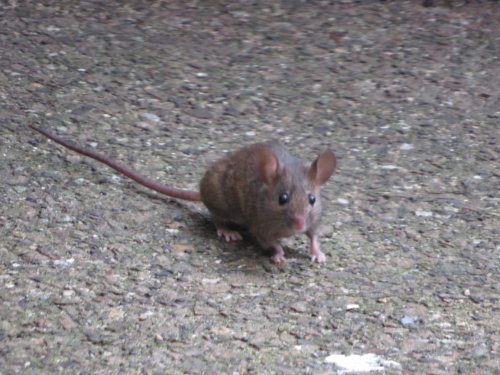 CAPochin
Stoneygate garden
17 October 2020
Leicestershire & Rutland Map
Enter a town or village to see local records
MAP KEY:
Yellow squares = NBN records (all known data)
Coloured squares = NatureSpot records: 2025+ | 2020-2024 | pre-2020
UK Map
Additional images