Bees, Wasps, Ants
All images on this website have been taken in Leicestershire and Rutland by NatureSpot members. We welcome new contributions - just register and use the Submit Records form to post your photos. Click on any image below to visit the species page. The RED / AMBER / GREEN dots indicate how easy it is to identify the species - see our Identification Difficulty page for more information. A coloured rating followed by an exclamation mark denotes that different ID difficulties apply to either males and females or to the larvae - see the species page for more detail.
Bees, Wasps, Ants
Solitary wasps
The familiar yellow and black social wasps are the outliers for the group - the vast majority of the world’s 100,000+ wasp species are solitary. The Chalcids, Ichneumonids and Braconids are particularly species-rich. For all their great ecological importance, most species are poorly studied and many of these are extremely difficult to identify.
Sphecidae - Sand wasps
These solitary wasps get their name because most nest in the ground. The female digs her own hole and stocks it with paralysed prey, usually other insects or spiders, for her young to feed on.
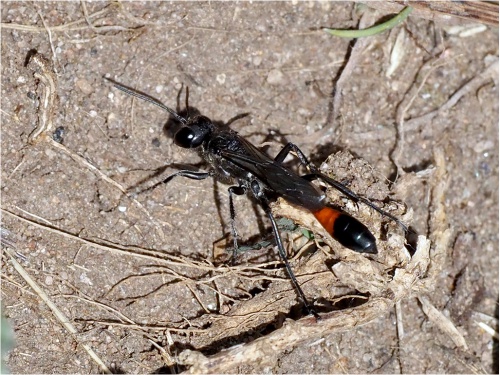

Pompilidae - Spider hunting wasps.
While many wasps are generalists, this family is dedicated to a single task - hunting spiders which they use as living larders for their offspring. Graham Collins' draft key to Pompilidae is on BWARS' website.
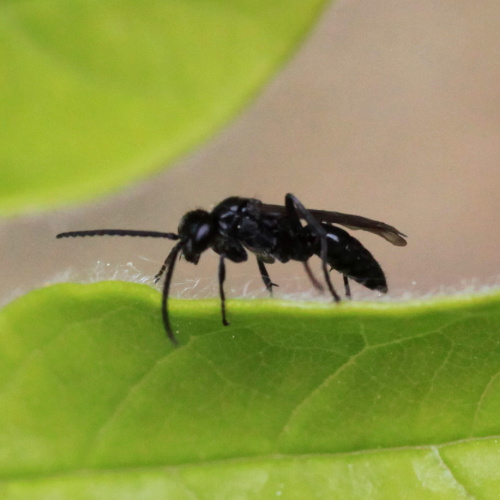
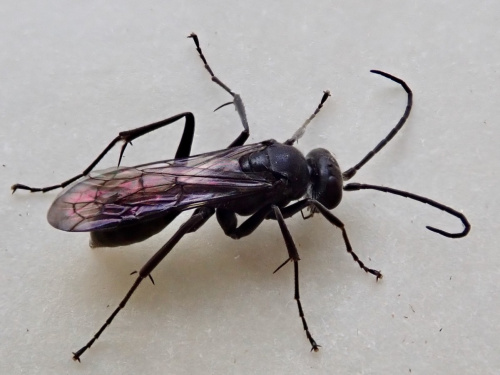
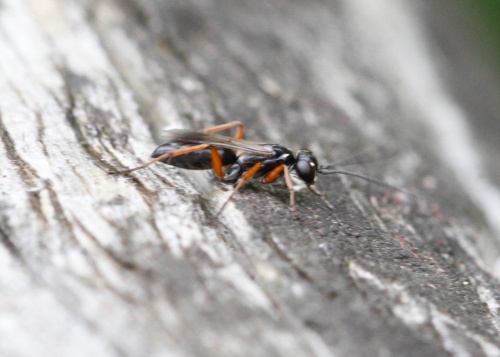

Sapygidae
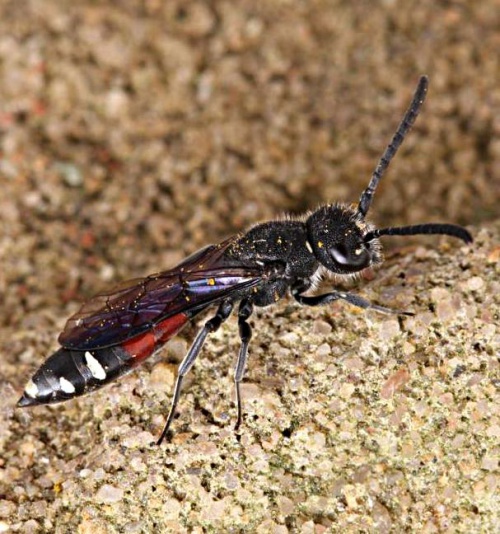
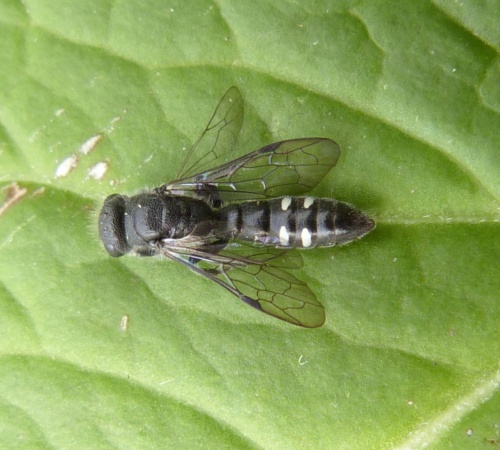
The Sapygidae, "club-horned wasps", are primarily cleptoparasites (or "cuckoo wasps") which do not build their own nests. Instead, they sneak into the nests of solitary bees - specifically leafcutter bees and mason bees. The Sapygid larva usually hatches before the host's egg and uses its large mandibles to destroy the host egg or young larva., then consuming the pollen and nectar that the host bee gathered for her own offspring.

Parasitoid and chalcid wasps - Chalcidoidea
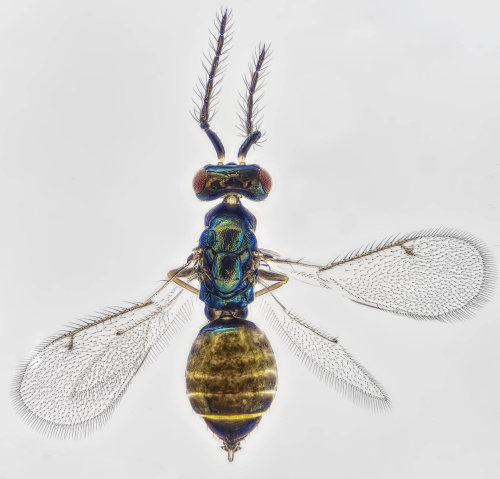
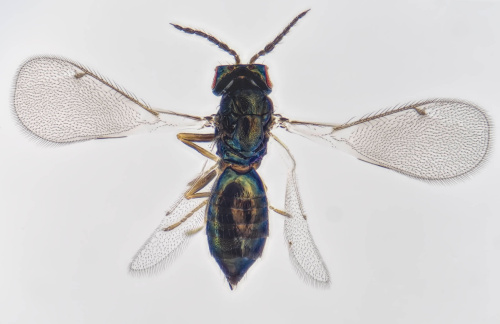
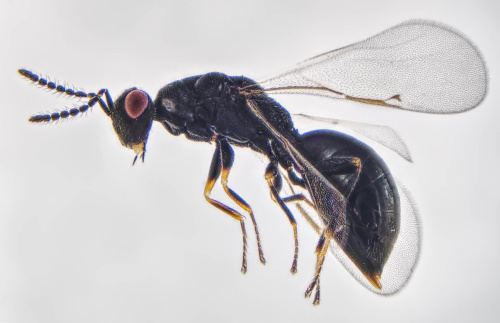
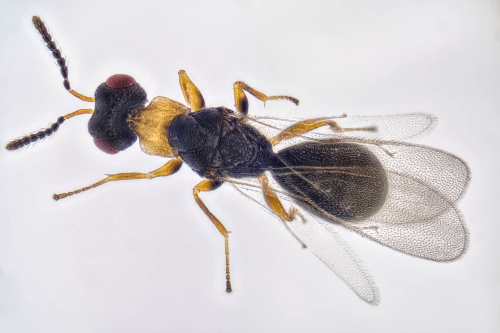
Chalcid wasps (from the Latin, "chalcis" - metallic-coloured) are a very complex and species-rich group with constantly evolving taxonomy. In the UK, 1,754 recorded species were on the 2016 checklist, although this is certainly an underestimate of the total. All are endoparasitoids, the females laying eggs inside host eggs or larvae, which their larvae consume and kill. These tiny wasps often have a wide global distribution and in addition have been very widely used as biological pest control.
Chalcididae - Chalcid wasps
The family Chalcididae is a subgroup group within the superfamily Chalcidoidea. Chalcididae are generally slightly larger, sturdier and have a more "armored" appearance than other Chalcidid families. The hind femur is greatly enlarged and muscular and the hind tibiae characteristically bowed to fit snugly against the swollen femur when the leg is retracted.

Mymaridae - Fairy wasps
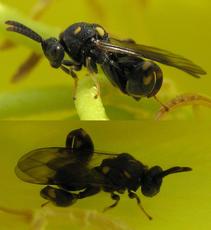
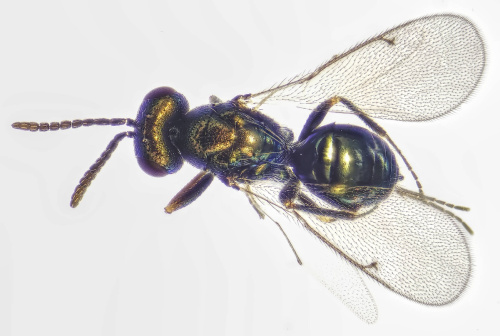
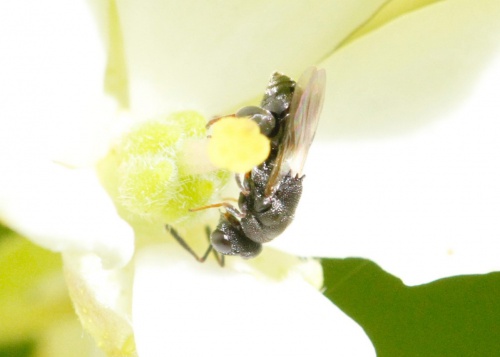
The fairy wasps are some of the smallest insects in the world but have been widely used in biological pest control. One North American species, Dicopomorpha echmepterygis, is only twice the width of a human hair. They are endoparasitoids on a wide range of insect hosts. One UK species, Caraphractus cinctus, lives underwater and is a parasitoid of water beetle eggs.
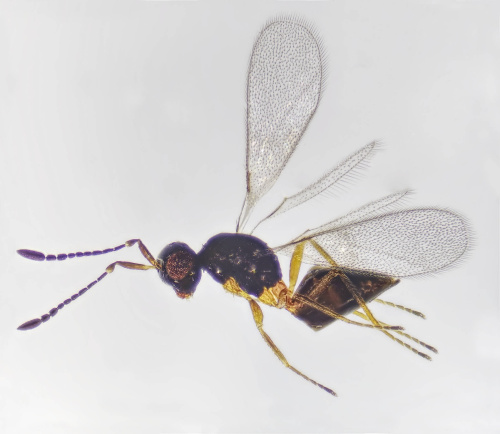
Encyrtidae
A large family of tiny wasps and one of the most important for biological control. e.g. Trichogramma evanescens is used to control Clothes Moths and Encarsia formosa used to control greenhouse whitefly - these are among the few wasps you can buy on Amazon.
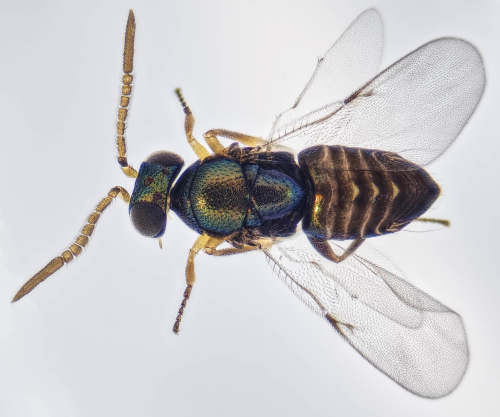
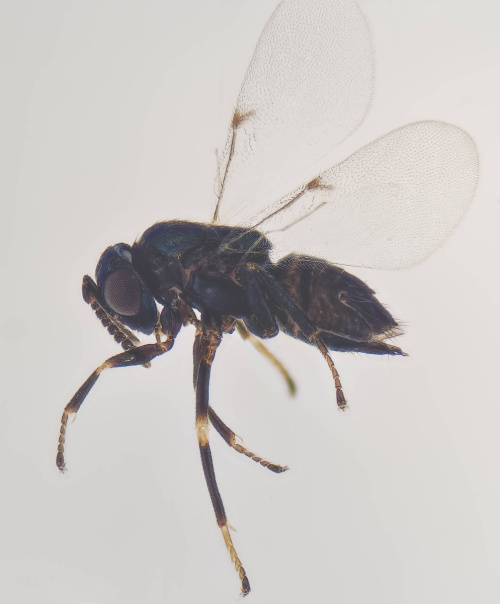
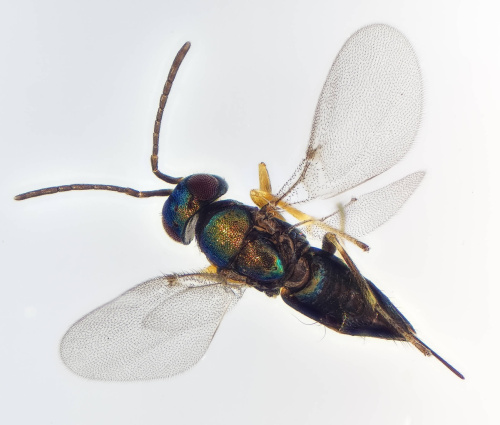

Eulophidae
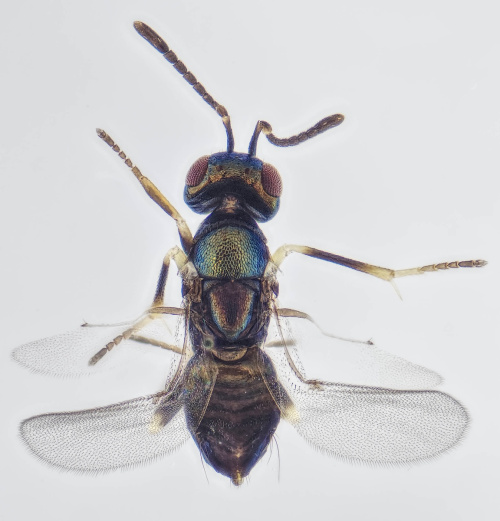
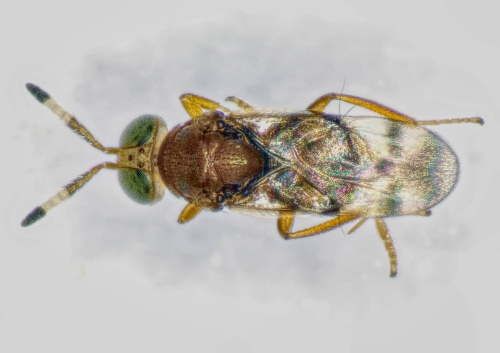
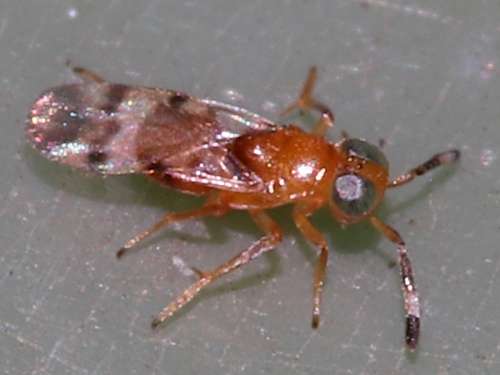
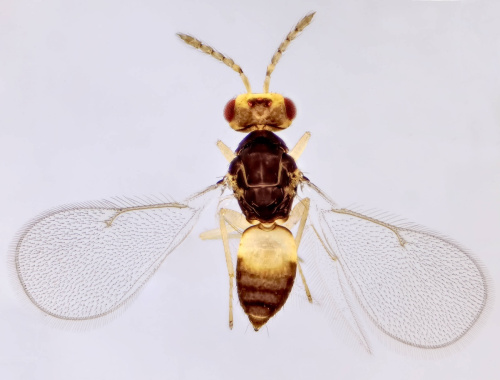
Eulophid wasps are endoparasites larvae, pupae and sometimes eggs of insects in over ten orders. They are major parasitoids of Leafminers (Diptera), Lepidoptera, Coleoptera, and Hemiptera. They are crucial in natural ecosystems and Integrated Pest Management (IPM) for controlling various insect pests, particularly leaf miners, beetles, and gall-formers. A few species cause plant galls.
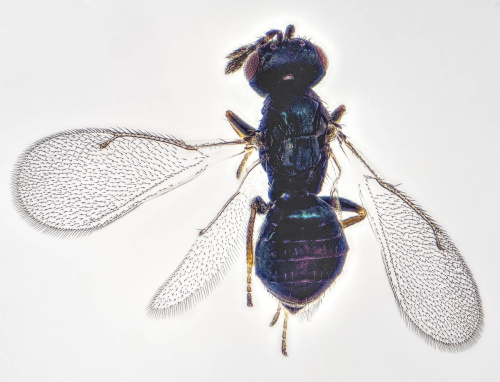
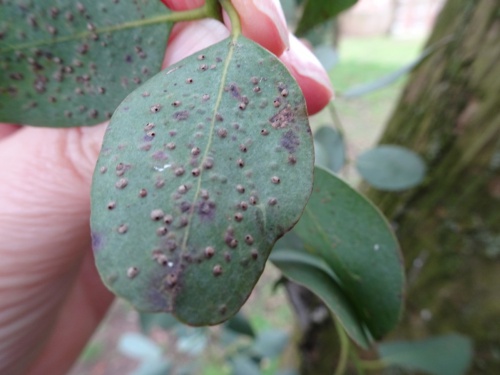

Eurytomidae - wasps
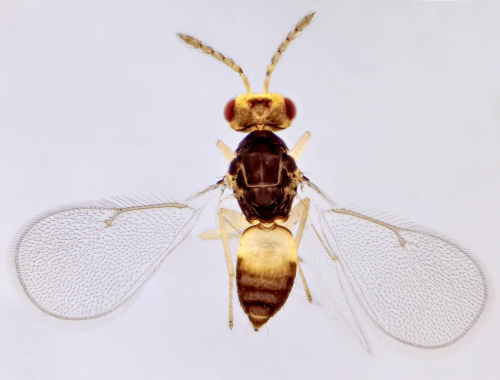
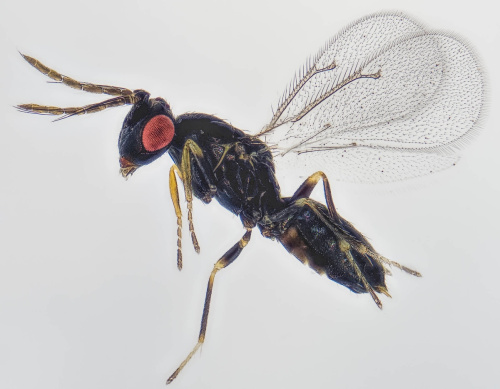
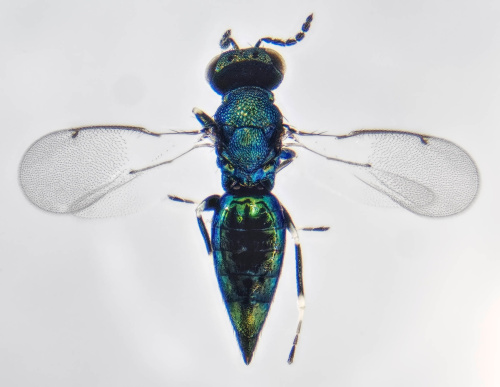
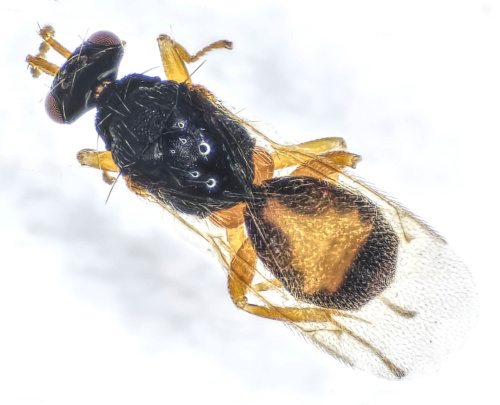
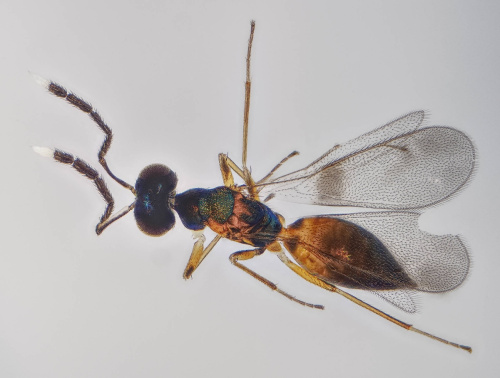
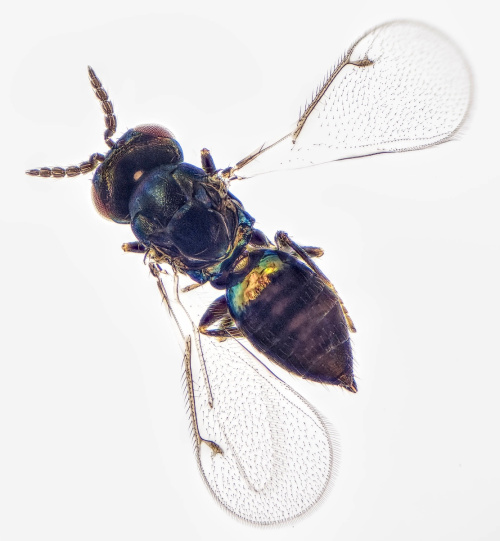
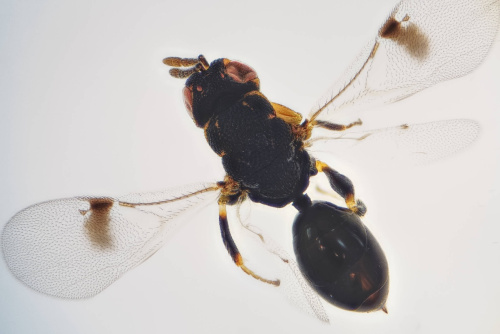
Eurytomidae are a diverse family of small, primarily non-metallic, black or dark-colored parasitic and phytophagous wasps. They are characterized by a coarse, pitted thorax. While many are parasites of larvae hidden within plant tissues (galls, seeds, stems), a significant number are phytophagous (feeding on plants), and some are specialized predators of spider eggs.
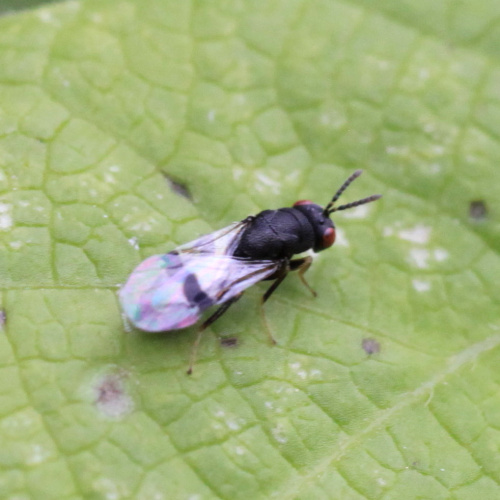
 Old Fosse Sapcote SP 4956 9179 (taken 4.8.2008).JPG)
 B4114 near Frowlesworth Turn Sapcote SP 4907 9229 (taken 1.11.2007),.JPG)