
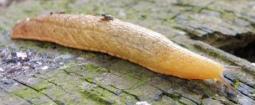
One of the great things about NatureSpot is that anyone can join in and add to our knowledge of wildlife in Leicestershire and Rutland (VC55). However, before you can submit a record you do need to be able to identify what you have seen. For some familiar groups this is relatively easy, but others are more challenging. Take Springtails - they are one of our commonest invertebrates and can be found almost everywhere, but we know very little about the Springtails of VC55. They are small - some are truly tiny at less than 1mm long, but they are also unfamiliar to most people. That's where NatureSpot can help you.

 The
The 
 Re-engagement with Britain's natural history has never been more urgent. Young people need the skills to name, observe, monitor and record wildlife. It is vital to understand the contribution nature makes to our lives physically, culturally, emotionally and scientifically both in the past and today. An Government online petition is collecting support for to
  2016 was another record year for NatureSpot, with the growth seen in previous years continuing. There were increases in the number of records submitted, the number of recorders, visitors to the website and the species profiled. Read the
 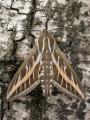 Currently over 80 volunteers across Leicestershire are monitoring moths in their gardens, but there is a gap in coverage in Market Harborough and the north eastern part of Harborough District. Could you help? Read more.
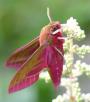 If you missed Adrian Russell's recent presentation summarising the finds and status of moths in Leicestershire and Rutland based on the 2015 records - you can view the slides on the
  The January edition of the Leicestershire Entomological Society newsletter is available for viewing or download - see the
  An otter was recently found dead inside a crayfish trap near to Leicester, unfortunately not a unique incident. All crayfish traps have to approved by the Environment Agency. If you find a trap without an EA tag, please call the free hotline
 A new mapping tool has been installed on NatureSpot that lets you explore and map all NatureSpot records. By using the filters you can map and list all records for a selected area, just your own records, or select a particular wildlife group. Visit the
  All records submitted to NatureSpot are checked to confirm the identification and details are correct - called verification. In conjunction with the Biological Records Centre, we are using a new system with five choices. You will see the icons for these in the verification column of your My Records page. See the
  A checklist of all the species of dragonflies and damselflies in Leicestershire and Rutland has just been published. This excellent document includes species distribution maps and notes of where best to see them locally. See